
Middlesex County Probate Court NJ handles the legal process of distributing a person’s assets after death. This court ensures that wills are valid and estates are managed properly. It also appoints executors and oversees the payment of debts and taxes. Families and representatives rely on the court for a smooth probate process.
Middlesex County Probate Court NJ is officially called the Surrogate’s Court of Middlesex County. It provides forms, instructions, and hearings for estate administration. The court also manages guardianships and estate accounting. Its role is to make the probate process clear, fair, and legally compliant.
How to Search Probate Court Records in Middlesex County
Finding probate records Middlesex County NJ is possible through the official Surrogate’s Court online index and, if needed, by contacting the Records Department directly. These records include wills, estate inventories, letters of administration, and other probate case details. Here’s exactly how users can search for them step by step:
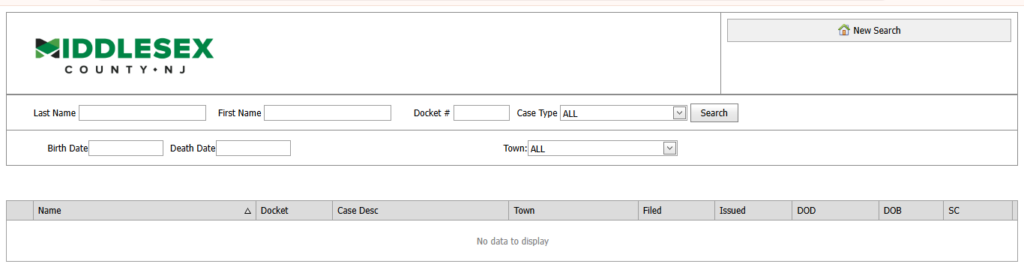
Start at the Official Middlesex County Surrogate’s Website
- Open your browser and go to the official Surrogate’s Court page of Middlesex County:
https://www.middlesexcountynj.gov/government/departments/department-of-community-services/office-of-the-surrogate - This page is the hub for probate information, including access to record search tools, forms, and instructions from the Surrogate’s Office.
- Look for the link labelled “Search Records” or “Index of Estates” on that page. That link typically leads to the online probate index.
Access the Probate Index Search Portal
- Once you click Search Records, you’ll be taken to the official probate index search interface. In Middlesex County, this tool is powered by the Surrogate’s database and allows public access to the probate index.
- A disclaimer page may appear first — read it and click “I Agree” if required to proceed to the search tool.
Enter Search Parameters in the Online Form
To find probate cases online probate records Middlesex County, enter one or more of the following fields:
- Last Name — Enter the decedent’s last name (required for most searches).
- First Name — Enter the decedent’s first name (if known).
- Docket # or Case Number — If you know it, enter it for precise results.
- Case Type — Choose the type of case (e.g., “Will”, “Administration”, “Guardianship”) if available.
- Death Date or Birth Date — Some tools allow narrowing by dates.
- Town or city may also be optional in the search form.
After filling in the details, click Search
Review the Results
- The search will return a list of matching cases with columns like Name, Docket, Case Desc, Filed Date, and other status information.
- Look for the probate entry that matches the person you’re searching for. If results are wide, narrow the search with more detailed input or date filters.
- Results may show limited summary information online (index data), but they still tell you the case Search in the Surrogate’s records.
Request or Access Full Documents
Not all probate documents (like full wills or inventories) may be freely viewable online:
- If the online search only shows an index entry, note the docket number and case year.
- Contact the Records Department directly to request copies:
- Mail your request to: PO Box 790, New Brunswick, NJ 08903
- Call the Records Department at 732‑745‑3310 for guidance on requests
What Is the Middlesex County Probate Court?
The Middlesex County Probate Court, also known as the Surrogate’s Court, handles legal matters related to wills, trusts, and estate administration. It oversees probate filings, guardianship cases, and ensures estates are settled according to New Jersey law.
The Middlesex County Probate Court NJ plays a central role in managing the legal process when someone passes away or becomes incapacitated. Its responsibilities include validating wills, supervising trusts, and guiding executors through estate administration. Residents often interact with this court to settle financial matters, transfer assets, or address guardianship issues for minors or adults unable to manage their affairs.
Key responsibilities of the Middlesex County Probate Court include:
- Wills and trusts: Reviewing and validating legally executed documents to ensure assets are distributed properly.
- Estate administration: Supervising the management and distribution of a deceased person’s property.
- Guardianship cases: Appointing guardians for minors or adults who cannot make decisions independently.
- Probate filings: Managing the submission of petitions, inventory of assets, and other required documents.
The Surrogate’s Court also maintains New Jersey court records, which are public documents detailing probate cases and related filings. These records provide transparency and allow beneficiaries, heirs, and attorneys to track the status of ongoing matters.
Jurisdiction & Functions of the Probate Court
The Middlesex County Probate Court NJ, also known as the Surrogate’s Court, oversees legal matters involving estates, wills, trusts, and guardianships. It ensures assets are distributed properly, guardians are appointed appropriately, and probate filings comply with New Jersey law. Acting as both a supervisory and judicial authority, the court plays a key role in protecting the rights of heirs and vulnerable individuals.
Probate of Wills
When a person passes away, their will must be filed with the Probate Court. The court checks that the document meets New Jersey requirements, including proper signatures and witnesses. Once validated, the court issues letters testamentary to the executor, giving them authority to manage the estate.
If there is no will:
- The estate is considered intestate.
- The court applies intestate succession laws to distribute assets to heirs.
- Executors or administrators follow court instructions to ensure lawful distribution.
Key Points:
- Resolves disputes among heirs
- Interprets unclear will provisions
- Ensures the deceased’s intent is respected
Estate Administration
Estate administration begins after a will is probated—or in intestate cases. The court supervises the process to ensure proper handling of all assets and obligations.
Steps in Estate Administration:
- Inventory of estate assets – Property, bank accounts, investments, and personal belongings.
- Creditor claims – Notifying creditors and paying debts.
- Executor responsibilities – Managing estate finances and providing reports to the court.
- Distribution to heirs – Transferring remaining assets according to the will or intestacy laws.
- Closing the estate – Filing final accounting for court approval.
Effective estate administration prevents disputes and ensures fair, transparent handling of property and finances.
Guardianship Proceedings
The Probate Court also handles guardianship cases for minors or adults unable to manage personal or financial matters.
How Guardianship Works:
- The court appoints a court-appointed guardian.
- Guardians may oversee healthcare, finances, and daily care.
- The court evaluates the ward’s capacity and ensures the guardian is qualified.
- Incapacity proceedings protect individual rights while ensuring care and supervision.
How Probate in Middlesex County Works
Probate in Middlesex County is the legal process used to manage and distribute a deceased person’s estate. Whether there is a will or not, the probate court Middlesex County supervises the process to ensure assets are handled fairly and creditors are paid. Here’s a clear step‑by‑step overview of how to probate a will in Middlesex County, including key actions and legal requirements.
Decedent’s Death & Locating the Will
The first step is confirming the decedent’s passing and determining whether a valid will exists.
- Locate the will among personal papers or with an attorney.
- If no will is found, the estate is considered intestate, and the court follows New Jersey succession laws to determine legal heirs.
Early identification of the will helps prevent delays and ensures the court recognizes the decedent’s wishes.
Filing the Petition with the Surrogate’s Court
Once the will is located—or in intestate cases—a petition for probate is filed with the Middlesex County Surrogate’s Court.
- The petition requests the court to officially admit the will or appoint an administrator if there’s no will.
- Filing initiates the formal probate process steps, creating an official record for the estate.
This step is essential for giving the executor or administrator the legal authority to act.
Serving Notice to Heirs & Beneficiaries
After the petition is filed, the court requires that heirs and beneficiaries are notified.
- Notice ensures transparency and allows interested parties to raise concerns or objections.
- Heirs are given the opportunity to contest the will if they believe there are legal grounds.
This stage prevents disputes later in the probate process and informs everyone entitled to the estate.
Appointment of Executor or Administrator
The court formally appoints an executor (if there is a will) or an administrator (if intestate).
- The executor receives letters of administration, giving them authority to manage the estate legally.
- Duties include safeguarding assets, paying debts, and distributing property according to the will or intestacy laws.
This appointment is the legal foundation for all subsequent probate activities.
Inventory & Appraisal of Assets
The executor compiles a detailed inventory of estate assets, including:
- Real estate properties
- Bank accounts and investments
- Personal property and valuables
An appraisal is often required to determine the fair market value of property, ensuring proper distribution and accurate estate tax considerations.
Paying Debts & Taxes
Before heirs receive any assets, the estate must settle all outstanding obligations:
- Creditor claims are reviewed and paid
- Any applicable estate taxes or final income taxes are filed
The court monitors these payments to ensure fairness and legal compliance.
Distribution of Assets
Once debts and taxes are cleared, the executor distributes the remaining assets:
- According to the will if one exists
- Based on intestate succession rules if there is no will
Beneficiaries receive their shares, and the executor keeps detailed records for court review.
Probate Timeline: How Long It Takes in Middlesex County
The probate process in Middlesex County typically takes 9–12 months for straightforward estates. However, timelines can vary depending on the size of the estate, complexity of assets, and whether any disputes arise among heirs or beneficiaries.
Factors Affecting the Probate Timeline:
- Complex estates: Multiple properties, investments, or business interests can extend processing time.
- Contested probate: If heirs challenge the will or dispute asset distribution, the timeline may stretch significantly.
- Outstanding debts or taxes: Settling creditor claims and estate taxes can add weeks or months.
- Court workload: Busy periods at the Middlesex County Surrogate’s Court can also cause delays.
Even for uncomplicated estates, executors should plan for at least 9 months to 1 year to complete probate. Monitoring the New Jersey court records related to the estate can provide updates on case status and help anticipate delays.
Probate Fees & Costs in Middlesex County
Probate in Middlesex County involves various fees and costs depending on the estate type and court filings. These fees cover administration, copies of documents, and guardianship matters.
Typical Probate Costs in Middlesex County:
- Wills and estate administration: $50–$150 filing fee for probate petitions.
- Letters of administration or testamentary: Approximately $50–$100.
- Certified copies of documents: $1–$2 per page or a set fee for official copies.
- Guardianship filings: $25–$100 depending on the type of guardianship.
- Additional legal fees: Attorneys’ fees vary based on complexity and service.
Factors That Influence Costs:
- Size and complexity of the estate
- Number of beneficiaries or contested matters
- Additional services like appraisals, accounting, or bond posting
These fees are structured to comply with New Jersey court fee schedules and may be similar to patterns in other NJ counties. Executors should budget for administrative costs and any unforeseen expenses to avoid delays in asset distribution.
Understanding probate costs early helps heirs and executors plan finances and ensures that the estate is administered efficiently without unnecessary surprises.
Probate Court Records & How to Find Them
Probate records in Middlesex County are generally public, providing transparency for heirs, legal professionals, and researchers. These records include wills, estate inventories, letters of administration, and guardianship filings.
Accessing Probate Records Middlesex County NJ:
- In-person: Visit the Middlesex County Surrogate’s Court during business hours.
- Online: Some records may be available through the New Jersey courts’ digital portals.
- By mail: Submit a formal request with the estate name, decedent, and case number if known.
Exceptions & Privacy Considerations:
- Certain records may be sealed, such as guardianship cases for minors or sensitive personal information.
- Personal details in financial documents may be restricted to protect privacy.
Tips for Efficient Record Retrieval:
- Provide accurate decedent information and case numbers if available.
- Specify the type of record requested (e.g., will, estate inventory, letters of administration).
- Include your contact information for court staff to respond.
Required Documents & Forms
When initiating probate in Middlesex County, having the correct documents and forms is essential for a smooth process. The Middlesex County Surrogate’s Court requires specific paperwork to validate wills, appoint executors or administrators, and manage estate administration.
Common Probate Forms Include:
- Petition for Probate: Filed to request that the court admit a will or appoint an administrator if there is no will.
- Death Certificate: An official copy is required to start the probate process.
- Inventory Forms: Used by the executor or administrator to list all estate assets, including real estate, bank accounts, and personal property.
- Notices to Next of Kin and Beneficiaries: Ensures heirs are informed and provides an opportunity to contest the will if necessary.
Other documents may include letters testamentary, which authorize the executor to act on behalf of the estate, and forms related to estate tax filings.
Middlesex County Surrogate’s Office: Location & Contact
Here’s how to reach the probate authority in Middlesex County NJ for wills, estate administration, guardianship matters, and other Surrogate’s Court business:
Office Location (Main Court):
Middlesex County Surrogate Court
County Administration Building
1st Floor
75 Bayard Street
New Brunswick, NJ 08901
Phone: (732) 745‑3055
Hours & Appointment Info:
- Monday–Friday: 8:00 AM – 3:45 PM
- Tuesday Late Nights: 8:00 AM – 6:00 PM
Appointments are required for in‑office visits. Call ahead or use the official online scheduling tool to book a time for probate matters.
Scheduling & Access:
The Surrogate’s Office operates by appointment only. To make a visit for filings or case consultations, schedule through the online calendar or by phone. If special accommodations are needed, contact the office in advance to arrange alternate assistance.
Mailing Address:
Middlesex County Surrogate Court
P.O. Box 790
New Brunswick, NJ 08903
Frequently Asked Questions About Middlesex County Probate
The Middlesex County Probate Court serves as a central hub for legal matters, and many residents have questions about its procedures, services, and public access. This FAQ section addresses common concerns and provides practical guidance for those interacting with the court system.
What is the Middlesex County Probate Court?
The Middlesex County Probate Court, also called the Surrogate’s Court, handles wills, trusts, estate administration, and guardianship cases. It ensures assets are distributed properly and legal requirements are followed. The court supervises executors or administrators and manages probate filings. Residents can access New Jersey court records through this office for transparency.
How do I probate a will in Middlesex County?
To probate a will, the executor files a petition with the Surrogate’s Court. Heirs and beneficiaries are notified, and the court validates the will. The executor receives letters testamentary to manage the estate. Assets are inventoried, debts and taxes are paid, and property is distributed according to the will.
How long does probate take in Middlesex County?
For most estates, probate typically takes about 9–12 months. Complex estates, creditor claims, or contested probate cases can extend the timeline. Court workload and estate tax obligations also influence processing time. Executors can monitor progress through New Jersey court records.
What are the fees for probate in Middlesex County?
Probate fees depend on the type of estate and filings. Filing a petition usually costs $50–$150, letters of administration $50–$100, and certified copies $1–$2 per page. Guardianship filings range from $25–$100. Executors should also budget for attorney or appraisal fees if needed.
How can I access Middlesex County probate records?
Most probate records are public, including wills, estate inventories, and guardianship filings. Records can be requested in person, by mail, or online through the Surrogate’s Office. Some sensitive cases, such as minor guardianships, may be sealed to protect privacy. Proper requests ensure compliance with court rules.